Senior Living and Reverse Mortgages in Port Charlotte
Port Charlotte is widely recognized as one of Florida's most distinctive retirement-driven communities, consistently ranked among the top destinations in the Southeast for affordability, harborfront living, and a master-planned street grid that makes navigation straightforward for newcomers. As the largest community in Charlotte County and a key anchor of the Punta Gorda Metropolitan Statistical Area, Port Charlotte draws retirees who want southwest Florida living without the crowds and premium price tags of Naples, Fort Myers, or Sarasota. As of April 2026, Port Charlotte's population of roughly 67,400 makes it one of the larger communities in southwest Florida, and the broader Charlotte County population has now passed 222,000.
The equity concentration among Port Charlotte's older homeowners is significant, and a Port Charlotte reverse mortgage offers a structured way to access that wealth without selling the home. Both the federally insured Home Equity Conversion Mortgage (HECM) and Jumbo Reverse Mortgage products are available to qualifying Port Charlotte homeowners aged 62 and older, with Jumbo programs allowing access to equity on higher-value properties well beyond the standard HECM lending limit. For homeowners along the saltwater canal system with seawalls and private boat docks, harborfront properties facing Charlotte Harbor, or larger custom homes in the Deep Creek and Heritage Lake Park sections, the Jumbo Reverse Mortgage often unlocks substantially more proceeds than a standard HECM. A Port Charlotte reverse mortgage requires no monthly principal-and-interest payment and allows the borrower to remain in the home as long as property taxes, insurance, and basic upkeep are maintained.
Florida's retirement-friendly tax structure makes the math even more favorable. The state imposes no personal income tax, no tax on Social Security benefits, and no estate or inheritance tax, while the homestead exemption protects a meaningful portion of assessed value from property tax for primary residences. Healthcare access in Port Charlotte has expanded considerably over the past two decades, with regional hospitals, specialty clinics, cardiac care centers, and senior care services concentrated throughout the Charlotte Harbor corridor. The cumulative effect is a community where retirement dollars stretch further than in most other Florida coastal markets, and where a Port Charlotte reverse mortgage can supplement Social Security, pensions, and savings without triggering additional state tax liability.
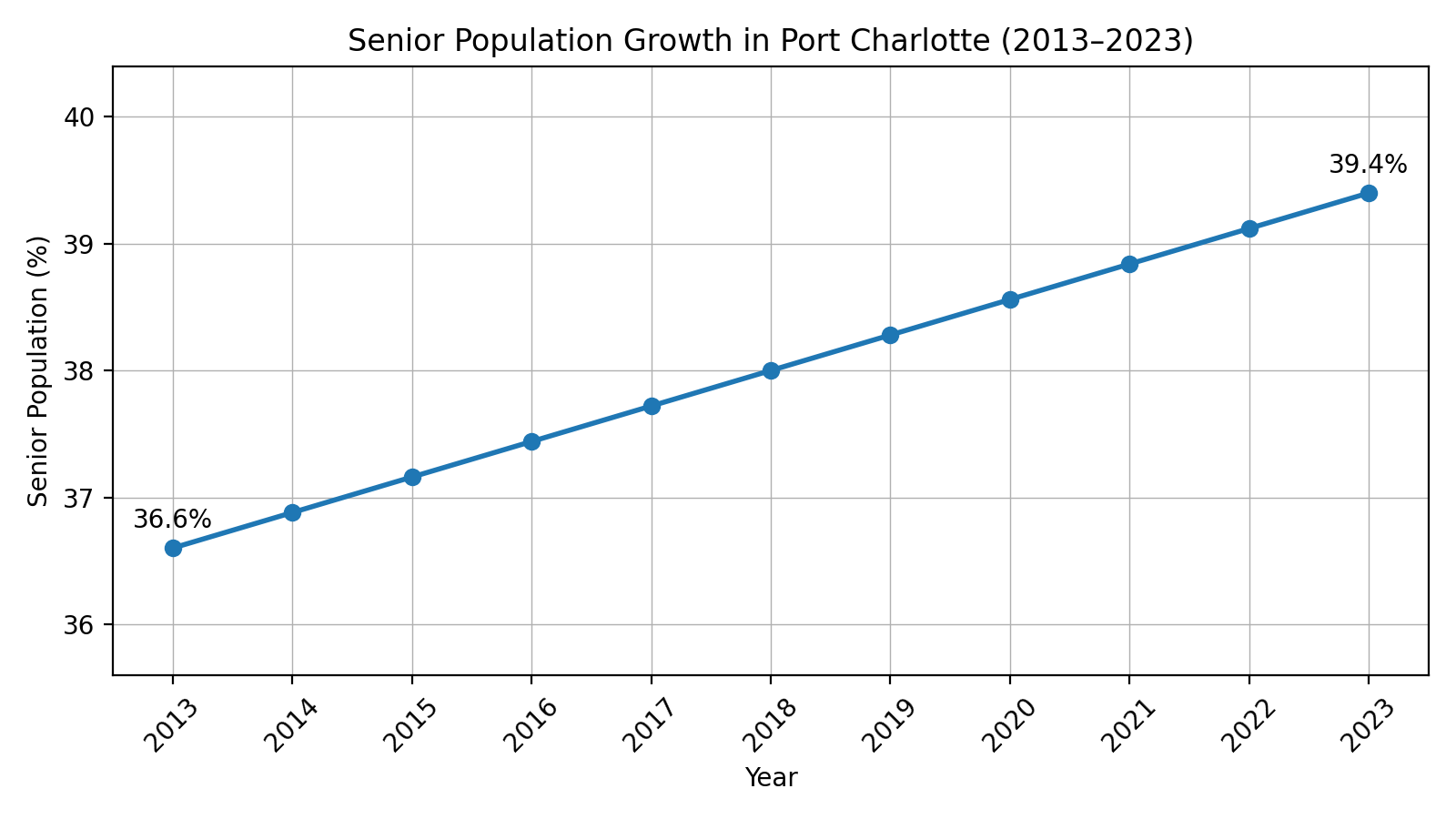
Per the 2024 American Community Survey 5-Year Estimates (released December 2025), median household income in Port Charlotte is approximately $63,844, with senior households reporting a median closer to $52,000. Racially and ethnically, the community is approximately 73% White, 13% Hispanic or Latino, 8% Black or African American, and roughly 2% Asian, with the remainder identifying as multiracial or other. English is the primary language spoken in the vast majority of households, while a meaningful share of residents speak Spanish at home, reflecting steady migration from across the country and from south Florida over the past two decades. These demographic patterns have shaped the demand for retirement-oriented housing, low-density living, and equity-based retirement planning across Port Charlotte sections.
Day-to-day life in Port Charlotte revolves around its blend of harborfront access, canal-front living, and an unhurried southwest Florida pace. Charlotte Harbor sits at the southern edge of the community and ranks as one of the largest open-water estuaries in the state, drawing boaters, kayakers, anglers, and waterfront homeowners. The Peace River feeds into the Harbor from the east and the Myakka River from the north, and a 165-mile saltwater canal network winds through the residential sections, allowing many homeowners to keep boats at private docks just steps from their back doors. Inland sections feature single-family homes on generous lots, with mature landscaping that has matured since the original 1960s and 1970s build-outs. For seniors, the combination of harborfront geography, year-round outdoor recreation, affordable home prices relative to the broader Gulf Coast, and a deeply established retirement culture defines what makes Port Charlotte a long-term home rather than just a place to spend a few winters.
To find out how much equity you could access from your Port Charlotte home, contact Florida's Best Reverse Mortgage Company today for a free, no-obligation quote. Our team specializes exclusively in Florida reverse mortgages and we'll come to your Port Charlotte home if that's easier than visiting one of our offices. Whether you're weighing a Port Charlotte reverse mortgage to eliminate an existing mortgage payment, build a standby line of credit, fund in-home care, or simply add monthly cash flow to your retirement, our Florida-licensed specialists will walk you through every option, every cost, and every safeguard so you can decide with full confidence whether a Port Charlotte reverse mortgage fits your goals.
Demographic and housing figures referenced on this page are drawn from publicly available U.S. Census Bureau data and standard real estate market reporting. Figures are estimates and may change as new data is released.